Thursday, April 4, 2019

Israel Feb 2019

Model of the old city of Jerusalem

We left Egypt and flew to Tel Aviv - although the two cities are relatively close, there are no direct flight between them. It took sixteen hours from the time we left our hotel in Cairo, flew to Athens, had a four-hour layover, landed in Tel Aviv, and got to the hotel in Jerusalem. We could have done the drive in nine hours! The next morning, we met our group of 20 other travelers, which included visitors from USA, Scotland, Canada, South Africa and Australia.  Our guide was Jewish, and well informed on Biblical and political history of the area. We started at Israel Museum Shrine of the Book where the Dead Sea Scrolls were on display. They also had a large model of Old Jerusalem. 
Jerusalem today

One of the most interesting non-religious sites we visited was Masada. Here on top of an isolated, almost inaccessible mesa, King Harrod built one of his many palaces. After Harrod’s death, the Sicarii Jewish sect controlled this fortress until a Roman siege led to their mass suicide. From here, I went for a float in the Dead Sea.
Basilica of Gethsemane
Christ Tomb in the Church of the Holy Sepulcher

The most religious site that we visited in Jerusalem was the Church of the Holy Sepulcher which contain the Rock of Calvary, the Stone of Unction, and Jesus’ Tomb. As we were leaving the church, the Greek Orthodox Patriarch of Jerusalem was entering the church, which serves as his headquarters.
Head of the Greek Orthodox Church
Western Wall
Silver Star marks where Christ was born

We entered Palestine to travel to Bethlehem and picked up a Christian guide for the half-day tour.  We went to the church at Shepard’s Field and then to the Church of the Nativity. We only had to wait about 20 minutes to see the silver star, which marks the place where Jesus was born. Some days the wait is 8 hours to get to that star. This guide provided us with a different perception of the Israeli Palestinian conflict. 

Basilica of the Annunciation

We entered Palestine to travel to Bethlehem and picked up a Christian guide for the half-day tour.  We went to the church at Shepard’s Field and then to the Church of the Nativity. We only had to wait about 20 minutes to see the silver star, which marks the place where Jesus was born. Some days the wait is 8 hours to get to that star. This guide provided us with a different perception of the Israeli Palestinian conflict. We returned to Old Jerusalem and walked through the maze of shops, many containing Christian souvenirs, made in China, sold by Muslims and untouched by Christian hands. On our way to Nazareth, we visited the Holocaust Museum and the fortified city of Megiddo. At the Basilica of the Annunciation, we saw the cave where the angel came to Mary.
Jordan River baptismal place
Mound of the Beatitudes Church

Pat was still feeling bad, so she took a day off from touring. The rest of the group headed to the Jordan River Baptismal Place and then drove into the Golan Heights. We saw pillboxes and mine fields, remnants of the 7 Day War with Jordan, as we drove around the Sea of Galilee. We visited the religious towns of Kursi and Capharnoun before arriving at the Mount of the Beatitudes.
Knight Templar
Market in the city of Acre
Persian Hanging Gardens of Haifa

The next day Pat was back on the bus and we toured the Crusaders’ Citadel at Acre. One man in our group was the highest-ranking Knight Templar in Scotland. He gave us a short talk about the Knights, but with his heavy accent, he was difficult to understand. We drove to Haifa and Mt Carmel to see the Baha’i Shrine and Hanging Gardens. Our last stop was Caesarea where we walked around the ruins of one of Harrod’s Palaces. From here we went to Tel Aviv and then flew to Amman, Jordan.

Jordan Feb 2019

Hadrian's Arch at Jerash
The Temple of Artemis at Jerash
Our trip started in Amman and our first stop was the 3rd century Greco-Roman ruins at Jerash, an important stop on the incense and spice trade route to the Mediterranean. Much of the city was still intact, especially its soaring Corinthian columns. It was amazing that these structures had survived this long. We also toured Citadel Hill, which overlooks Amman, before heading to Petra. 
Pat in the Siq

Petra is the main reason most travelers come to Jordan - it is one of the new Seven Wonders of the World and a World Heritage Site. The City was carved into the shear rock face over 2,000 years ago. It was a major trading city on the silk and spice caravan routes. The Nabataeans were early water resource engineers and they harvested rainwater and constructed tunnels to create a pseudo oasis in an arid area that supported over two thousand people.
View at the end of the Siq
The city is isolated by a ¾ mile long narrow entrance passage called the Siq. At the end of the Siq, you get the first glimpse of the Treasury, the most photographed structure in Jordan. Much of the city was destroyed by an earthquake, but many tombs remain, along with a temple, church, monastery and a 4000 seat Amphitheater carved into the stone walls. We spent a full day exploring the various structures.
Obelisk tomb
The Royal Tombs
The Treasury
The Promised Land from Mt Nemo
On our return trip to Amman we stopped at Shobek to see the Crusader Castle from 1115. At Mount Nemo we view the Promised Land as Moses once did. At St George’s Church in Madaba we saw the world’s largest mosaic map. The map covers the Middle East with details of the Holy Land and Jerusalem.

The Brazen Serpent
Madaba's Mosaic Map
The next day we had an early flight to London. We had tickets to see “The Book of Mormon” but Pat was still ill so we rested at the airport hotel and flew back to VA the next day. When we arrived in Laurel, MD, Pat went to the urgent care center and they sent her to hospital because they were afraid she might have a PE. It turned out to be Pneumonia, which Pat has finally recovered from.

Tuesday, March 5, 2019

London and Egypt Jan-Feb 2019

St Margaret's Chapel - Westminster Abbey
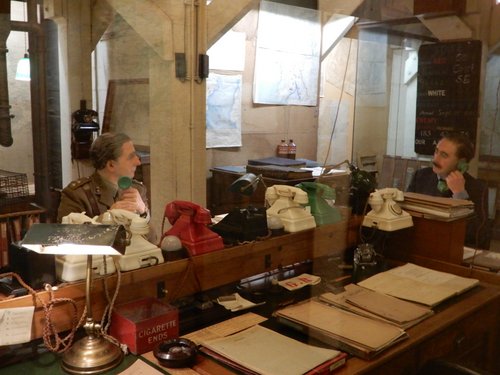
Map Room - Churchill's War Rooms
Our first destination was London, so we got a hotel in the Paddington Square area. From here it was easy to get to all the sights in London. We took self-guided tours of Westminster Abby and St Paul’s Cathedral. I visited the Natural History Museum while Pat explored the Victoria and Albert Museum. At the British Library we saw the Magna Carta, then we toured Churchill’s War Rooms. We wanted to see some plays, but the popular ones were booked up. I thought this was supposed to be the off season. We did see Agatha Christie’s Mousetrap and a Comedy About a Bank Robbery. Both were very good. After four nights in London we were off to Egypt.
St George Church

When we landed in Cairo, we had a choice for the following day; take a 3 hr bus ride to Alexandria to tour the city and return or a free day to do as we pleased. While we would have loved to see Alexandria, a long day on the bus followed by a 3 am wake-up the next day was too much. So, we hired a cab and toured Old Cairo. This area is the center of the Coptic religion. The majority of Egyptian Christians belong to the Coptic Orthodox Church, the dominant religion in Egypt before Islam. We visited St George and St Bernadette’s Churches and the Coptic Museum.
Luxor Temple
Avenue of Sphinxes

The next day was the first day of our Trafalgar 9 day Best of Egypt Tour. Our small group consisted of two other couples and two women traveling on their own. All were Americans. Our tour guide was a local who had extensive knowledge of ancient Egyptian history and spoke excellent English. Up before dawn, we got the 6:30 AM flight to Luxor where our Nile cruise would start. But first we toured Karnak: Temple of Amon. It remains the largest religious structure ever built, expanded to cover 200 acres. Not surprisingly, we were the first to arrive. It was quite crowded by the time we left. After lunch on the boat, we toured Luxor Temple and saw the Avenue of Sphinxes. The next day we took a bus to the Valley of the Kings. Egypt’s Pharaohs from 1500-1000 BC were buried here. Sixty-three tombs have been found. We toured four tombs including Tutankhamen’s. We also toured two more temples and then we cruised to Edfu.
Ramses IV tomb


Ramses III Tomb


Our Nile Cruise Ship
Vendors in boat tied to our ship 

As we cruised up the Nile River, small boats will pull along side us, tie to our boat and proceed to sell their goods to the cruiser. If you show the least bit of interest in their goods, they will throw the item, with pinpoint accuracy, as far as four decks up, for you to review. If you want the item, place money in their container and throw it back, if not, drop the item into the boat below. Everywhere you went in Egypt, vendors were close by, trying to sell their goods. Most souvenir items could be bought with “just a dollar”. Of course, all the cheap stuff comes from China. We did have the “opportunity” to buy locally made products such as Egyptian Cotton, essential oils, alabaster products, and art on Papyrus. Yes, they take credit cards. To say the sales staff was persistent would be an understatement. I think they eat Timeshare salespeople for breakfast.


Carriage Ride to Edfu
Edfu Temple

At Edfu, a horse drawn carriage took us to the Edfu Temple. We waited there for the others in our group to arrive in their carriage. When one couple didn’t show up, our thoughts went to kidnapping. Finally, they did show up, they just had a very slow horse. Actually, we felt very safe on Egypt (and Israel and Jordan), there were soldiers and police everywhere. We didn’t see anyone with a gun that shouldn’t have one. They seemed happy to see Americans. Their tourism is about a third of what it was before the Arab Spring. My advice-GO NOW!
Sobek - Crocodile God

We cruised up to Kom-Ombo, toured the Temple of Sobek. Sobek was the Crocodile God. We visited the Crocodile Museum, a museum full of mummified crocs! The Nubians used to worship Sobek and now keep crocodiles at their house, alive or stuffed, as a talisman against the evil eye. 
Felucca
Our cruise ended at the Aswan High dam. We took a short trip in a felucca, an Egyptian sailboat. A motorboat took us to Kitchener’s Island and Botanical Garden. A local guide took us to his Nubian Village. The guide spoke perfect King’s English along with the British accent. He had never traveled outside of Egypt, but admitted he learned English by watched a lot of British TV.
Abu Simbel -Temple of Ramses II

From Aswan we flew further south to Abu Simbel. This temple was carved out of a mountain between 1244-1224 BC, during the reign of Ramses II. Over time it was forgotten and partially buried under sand. It was rediscovered in 1813 by a Swiss scholar, and later excavated. The building of the Aswan High Dam would have submerged this Temple under Lake Nasser. Between 1964-1968 a UNESCO project coordinated the dismantling of the temple and moving it to higher ground. It is amazing how well the new temple resembles the original one.
Mosque of Mohammad Ali (not the boxer)
Pyramid of Cheops

From here we flew back to Cairo and toured several mosques, one had the tomb of the last Shah of Iran. That evening we took a van out to the Great Pyramids of Giza. The van broke down on the way out, and we were rescued by another of the tour company’s buses.  They say it only rains three days in Egypt, and today was one of those days. Rain and lightning greeted us as we approached the outdoor theater. By the time the Light and Sound Show started, the rain had stopped, but the wind had picked up and was now blowing sand directly into our face. It’s hard to watch a show when you are being sandblasted in the face! Under these conditions, we could hardly enjoy the show, and couldn’t wait until we could get back on the bus. Pat was sick for the next four weeks. She was diagnosed with pneumonia when she returned home.
Great Sphinx
The day after the sand storm, we returned to the Great Pyramids on rainy day #2 and climbed up to the Throne Room inside the Pyramid of Cheops. Pat climbed into a second pyramid, but one back-breaking tunnel passage was enough for me. Later we would see Djoser’s Step Pyramid, the oldest colossal stone building in Egypt, built in the 27th century BC! On our last night in Egypt we took a dinner cruise on the Nile with the rest of our group. This was an excellent trip, thanks to our guide who brought ancient Egyptian history to life.
Djoser's Step Pyramid

Monday, January 14, 2019

PA - SC Nov 2018 - Jan 2019

Sunset at Myrtle Beach*
A new build*

After getting our RV serviced in Elkhart IN, we returned to MD and stayed at a campground in Woodbine, MD for a month. This gave us a chance to catch up on doctor’s visits and visit friends. In December we traveled to Myrtle Beach for two weeks to work with Habitat for Humanity. Another RVer, Diane from MN, joined us for the build. Habitat had arranged for discounted camping rates right on the beach. We worked for 11 days - first we were installing siding on a new build. We had to stop that work because the window delivery was delayed. We also worked on a house that was being painted after the first owner moved out, and another house that had to be gutted down to the frame and rebuild because of gross owner neglect. This was a rare occurrence, since the owners have to work at least 200 hours for Habitat before they are eligible for a house. They get an interest free mortgage that covers the cost of the materials, and Habitat holds the mortgage.

Breakfast for One*
Rebuild

Our construction supervisor was Rod, who did an excellent job with the volunteers.  All tools, safety gear and training were provided. In addition, there was a hard-core group of volunteers that worked three days a week and was very experienced. Some days, other groups would show up and sometimes it was a challenge to keep everyone busy. Of course, you could work at your own pace and take breaks as needed. Everyone was friendly and helpful. 

Don and Pat at Myrtle Beach*
                                                                 A completed house

In addition to our time in the field, we received an orientation about Habitat, attended a Christmas party, met many of the people running the program and the people working their way toward home ownership. We even attended a ribbon-cutting ceremony on a house which we did some last-minute prep work on. It was a very rewarding experience, but it was also physically demanding, especially for someone not used to that kind of work. (OK, not used to any work!)
Diane, Rod and Don
Brookgreen Gardens

Habitat also gave us free tickets to the Christmas Show at the Alabama Theater, which was great. We also drove down to Brookgreen Gardens to see their Nights of a Thousand Candles. While we were working for Habitat, my Aunt Catherine’s husband, Hal passed away. He had been sick for months. Early in his career he was a Royal Canadian Mounted Police and later he was an elected public official. He also loved to sail. He was well respected in St John’s NL. The flags were flown at half-mast in his honor.


Aunt Catherine and Uncle Hal
The only way to Fly

Somehow, we managed to catch Myrtle Beach during a very wet period. It must have rained at least 6 inches during the time we were there. There was no incentive to stick around, so we got a timeshare in Chancellorsville, VA. From here we were able to tour some of the Civil War battle sites in the area. We returned to MD just before Christmas, and moved in with Tom and Julie. We had a Christmas Eve dinner with my family in Baltimore and spent Christmas day in York with Pat’s family. Pat’s brother Phil and wife Connie came back to visit, so a big gathering of the relatives took place in a restaurant in Thurmont, MD. We celebrated New Years at the bowling alley in York, like we had done in the past.
New Years Eve Party at the Bowling Alley

In January, we worked on getting our vehicles serviced in preparation for our RV trip to British Columbia, and we got ready for our trip to England, Egypt, Israel, and Jordan.


* Photos by Diane Johnson